
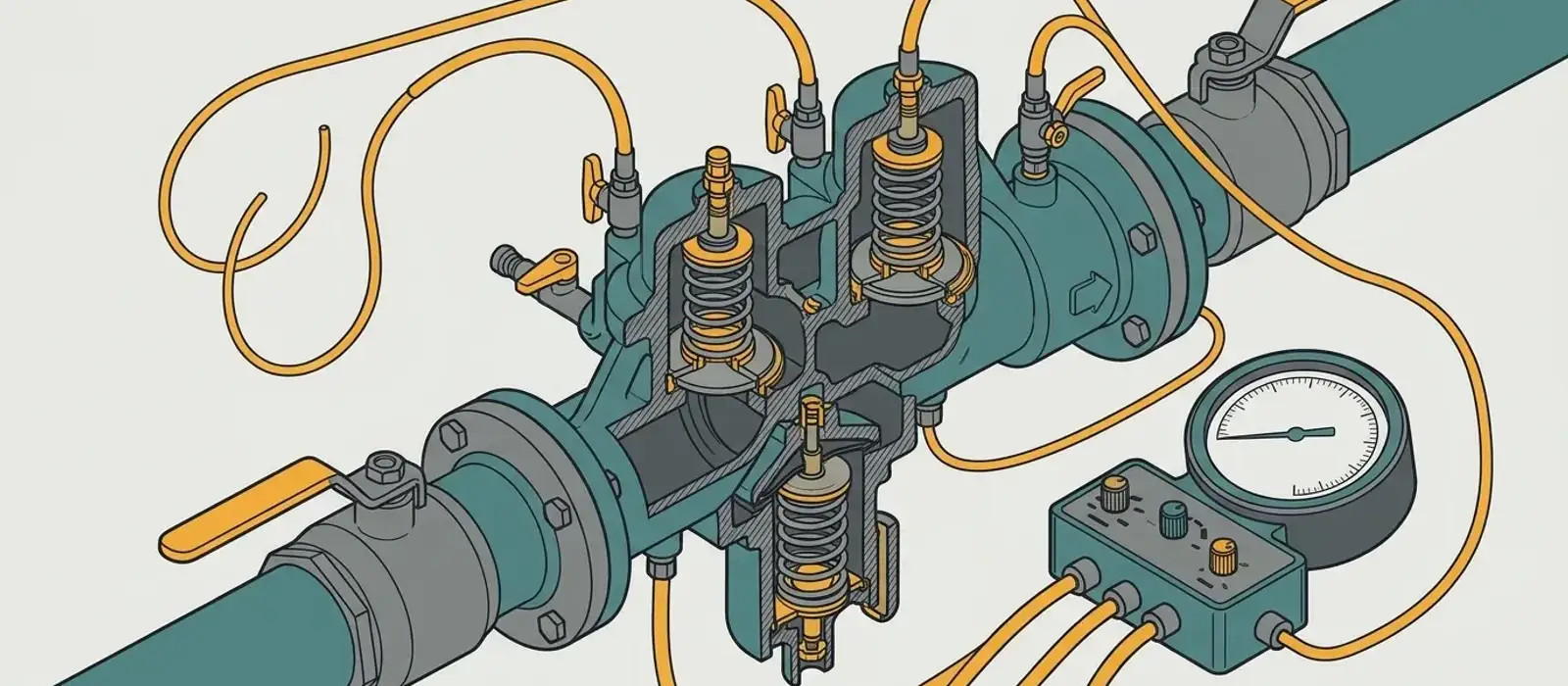
A backflow preventer stops contaminated water flowing back into the public supply. Commercial buildings, irrigation systems and fire sprinkler lines commonly have them.
How It Usually Works
- Your water utility sends a notice with a due date.
- A certified tester checks the device, usually in under an hour.
- The tester or you file the report with the utility.
- Failed devices are repaired and retested.
Advertisement
Plan for the Water Shutoff
The water may be off briefly during testing. Warn tenants and schedule around peak hours. A device on a fire line needs extra care: tell your fire protection contractor and follow your impairment procedure.
What If You Miss It
Consequences vary by utility, from reminders and fees up to loss of water service. Ask for an extension before the deadline if you need one.
Many plumbers and some fire protection companies test backflow devices. Ask for the tester's certification, and keep every report.